











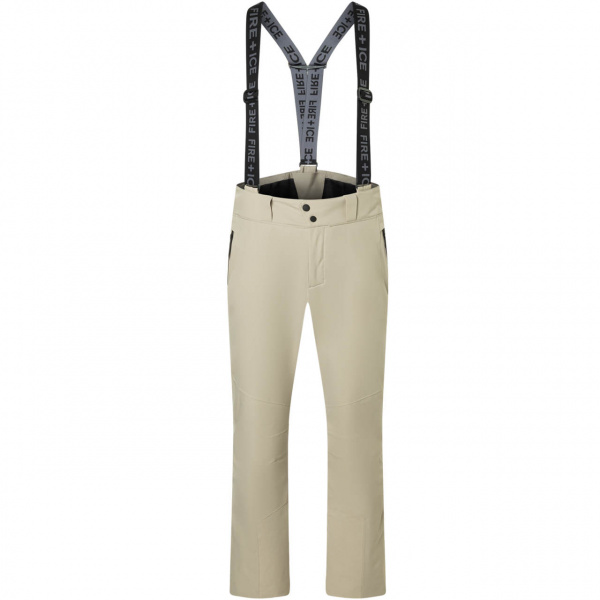

22 of 381 Products shown
Buying Ski Pants: Which Pair Is Right for You?
A good pair of ski pants keeps snow and moisture out, protects you from the wind, and gives you plenty of freedom of movement while skiing. For cold days on the slopes, lined ski pants are often the most comfortable option. If you ski aggressively or are out in changing temperatures, unlined hardshell ski pants are often a better choice. At XSPO, you’ll find ski pants for a variety of needs. We’ll show you what really matters when it comes to water column, breathability, insulation, and fit.
Which ski pants are best suited for which activity?
Whether a pair of ski pants is right for you depends mainly on how and in what conditions you ski. If you spend a lot of time on the lift, you’ll have different needs for thermal insulation than someone who skis aggressively and works up a sweat quickly. The difference between classic on-piste pants and deep-snow ski pants is also greater than it seems at first glance.
| Relaxing Days on the Slopes | Lined Ski Pants | Thermal insulation, comfortable fit, snow guard |
| Competitive Skiing | Lightweight ski pants with ventilation | Breathability, freedom of movement, ventilation openings |
| Cold Winter Days | Well-insulated ski pants | Heat retention, wind protection, space for technical underwear |
| Changeable weather | Waterproof Hardshell Ski Pants | Water column, sealed seams, ventilation |
| Freeride and Deep Snow | Durable hardshell ski pants or overalls | Weather protection, high waistband, snow guard, edge protection |
Our XSPO tip: Don't just buy the warmest pair of ski pants you can find. If you break a sweat on every run, what you need most is good temperature regulation. Thickly lined pants can become uncomfortable, even in sub-zero temperatures.
What features are really important in ski pants?
Water column, breathability, and fabric construction say a lot about the performance of a pair of ski pants. But only if you interpret the specifications correctly. A high water column alone doesn’t make for a good pair of ski pants. Likewise, high breathability doesn’t automatically mean you won’t sweat while skiing.
Water column: Is 10,000 mm enough for ski pants?
The water column measures a material's resistance to water penetration. It measures the hydrostatic pressure a material can withstand under defined test conditions before water penetrates it. For example, a water column of 20,000 mm corresponds to a water pressure of approximately 1.96 bar.
The following measurements can serve as a guide when choosing ski pants:
| Less than 10,000 mm | Lower resistance to water pressure | Best suited for dry conditions and shorter stays in the snow |
| 10,000 mm | High-quality material suitable for many recreational uses | Often sufficient for days spent mostly on dry slopes |
| 15,000 mm | Enhanced protection against water pressure | A good choice for regular skiing and changeable weather |
| 20,000 mm and more | High resistance to water pressure | Good for extended use in snow and wet conditions |
These values are not binding quality ratings. Ski pants with a 20,000 mm water column rating are not automatically waterproof under all conditions. Seams, zippers, and the overall construction of the pants also play a role. The material is subjected to additional stress, especially when sitting on a wet chairlift or kneeling in the snow.
XSPO Tip: In addition to the water column rating, pay attention to the seam construction. A high water column rating for the outer material is of little use if water can seep in through unprotected seams.
Breathability: What Do MVTR and RET Mean for Ski Pants?
Breathable ski pants allow water vapor to pass from the inside to the outside. This is important because physical exertion while skiing causes moisture to build up. If this moisture remains trapped in the clothing, the pants will eventually feel damp. During rest periods, this can cause you to lose body heat.
Two main metrics are used to measure breathability:
| MVTR | Water vapor permeability in g/m²/24 h | Within the same test procedure, higher values indicate greater water vapor permeability. |
| RET | Water vapor transmission resistance in m² Pa/W | Lower values indicate less resistance to moisture transport. |
For example, an MVTR value of 20,000 g/m²/24 h describes a water vapor permeability—determined in a laboratory—of 20 kilograms per square meter within 24 hours. This does not mean that a skier actually produces this amount of moisture or that it is wicked away under all conditions.
Important: Measurements obtained using different testing methods cannot be easily compared with one another. For practical use, therefore, ventilated zippers are also worth considering. They allow for direct air exchange when it gets too warm during downhill runs.
Hardshell or Softshell: What Are the Differences?
Hardshell and softshell differ primarily in their material construction and their primary function. While hardshell ski pants are designed to provide reliable weather protection, softshell ski pants often prioritize flexibility and comfort.
| Weather protection | Usually waterproof and windproof | Often windproof and water-repellent, depending on the design |
| Freedom of movement | Depending on the cut and the amount of stretch | Often particularly elastic |
| Thermal Insulation | Minimal for unlined models | Depending on the material thickness and interior features |
| Typical application | Groomed runs, Freeride, and changeable weather | High-intensity operations in relatively dry conditions |
Unlined hardshell ski pants can be combined with various layers of clothing in a particularly versatile way. This makes them a great choice for skiers who are out on the slopes in a range of temperatures.
When it comes to technical hardshell materials, a distinction is often made between two-layer and three-layer constructions. In a two-layer construction, the membrane is bonded to the outer fabric, while a separate inner lining protects the functional layer. In three-layer materials, the outer fabric, membrane, and inner protective layer form a single, solid unit.
Surface treatment also plays a role. A so-called DWR treatment ensures that water initially beads up and rolls off the outer fabric. However, it is not the same as a waterproof membrane. If the water-repellent effect wears off, the outer fabric can become saturated with water, even though the underlying membrane remains waterproof.
How does the layering principle work with ski pants?
With the layering principle, multiple layers of clothing are combined in such a way that moisture is wicked away, heat is retained, and wind and snow are kept out. Unlike on the upper body, one or two layers are often sufficient under a pair of ski pants.
| Base layer | Wick moisture away from the skin | Long functional underwear made of synthetic fibers or merino wool |
| Optional Insulation Layer | Store Additional Heat | Lightweight fleece pants or a suitable insulating midlayer |
| Outer layer | Protect against wind, snow, and rain | Hardshell, softshell, or lined ski pants |
With lined ski pants, a pair of long performance base layers is often sufficient. The insulation is already built into the pants. With unlined hardshell ski pants, on the other hand, you can better control the level of warmth by adjusting the layers you wear underneath.
Cotton is less suitable as a base layer. It absorbs moisture and dries relatively slowly. Performance fabrics made of synthetic fibers or merino wool, on the other hand, help manage moisture.
XSPO Tip: More layers don't automatically mean more warmth. If your clothes are too tight, the insulating layer of air gets compressed. It can also restrict your range of motion. Especially with ski pants that are already lined, less is often more comfortable.
What features make for a good pair of ski pants?
Whether a pair of ski pants really works for everyday use often comes down to the small details. For example, a snow cuff prevents snow from getting into the pant leg from below. Reinforcements on the inner sides of the legs protect the fabric from sharp ski edges. And an adjustable waistband can significantly improve the fit.
| Built-in snow guard | Reduces snow from getting in at the bottom of the leg | All skiers, especially in deep snow |
| Edge Protection | Protects high-wear areas from damage caused by ski edges | Sporty riders and Freeriders |
| Ventilation Zippers | Allow for additional air exchange | Sporty drivers and warmer days on the slopes |
| Adjustable Waistband | Makes it easier to adapt to the body's shape | All skiers |
| Suspenders | Help ensure a secure fit | Skiers who prefer a stable fit |
| Pre-shaped knees | Support freedom of movement while bent over | Competitive skiers |
| High waistband or bib | Provides additional protection against snow entering the vehicle | Freeriders and deep-snow skiers |
When choosing a snow gaiter, it’s worth taking a close look at the fit. It’s pulled over the shaft of the ski boot and should fit as snugly as possible there. It doesn’t belong inside the ski boot, since extra material inside the boot can cause pressure points.
How do you find the right pair of ski pants?
- Think about when and how you ski. For leisurely days on the slopes in cold temperatures, lined ski pants are often a good choice. If you ski aggressively or are often out in changing conditions, you should consider unlined hardshell ski pants.
- Choose the weather protection that best suits your needs. A water column rating of 10,000 mm may be sufficient in predominantly dry conditions. In areas with regular snowfall and wet conditions, higher ratings are recommended. Also pay attention to seam sealing and workmanship.
- Take your sensitivity to heat into account. If you get cold easily, extra insulation can be comfortable. If you tend to sweat easily while skiing, a lighter design and ventilation openings are often more important.
- Check the fit while moving. Ski pants shouldn't just be comfortable when you're standing. Get into the typical skiing position with your knees bent. The pants shouldn't feel tight around your buttocks or thighs. At the same time, they should provide enough room for technical underwear.
- Pay attention to your leg length and your ski boots. The pant legs must fit over the shaft of your ski boots. When standing, the pants may appear slightly longer, but they should not drag on the ground when walking. When you’re in a crouched position, the pant legs must still provide adequate protection.
- Choose the features that best suit your needs. Snow guards and edge protection are useful for many skiers. Ventilation openings offer advantages under heavy loads. A bib or suspenders can improve the fit, but aren't necessary for everyone.
Our advice: Ski pants should suit your skiing style—it’s not enough for them to just have good technical specs on paper. The best water column rating is of little use if the pants feel tight while you’re skiing. Conversely, a comfortable fit won’t help if you get wet quickly when it snows.
What's the difference between classic ski pants and race training pants?
Ski pants for general use on the slopes are designed to provide weather protection, freedom of movement, and comfort throughout an entire day of skiing. In alpine racing, on the other hand, special training pants are often used. They are worn over the racing suit, and many models feature long side zippers so they can be quickly removed before the start.
The cut and features may also vary. For example, race training pants do not need to meet the same requirements for thermal insulation and all-day comfort as classic ski pants. If you’re looking for clothing specifically designed for race training, ski clubs, or competitions, you should check out the Race & Teamwear section.
At XSPO, we focus on finding the right gear for your specific needs. As a family-run business with experienced winter sports enthusiasts on our team, we combine expertise with a carefully curated selection of products. Whether you’re looking for warm ski pants for long days on the slopes or technical hardshell ski pants, we’ll help you understand the differences and make the right choice.
Frequently Asked Questions About Ski Pants
Buying Ski Pants: Which Pair Is Right for You?
A good pair of ski pants keeps snow and moisture out, protects you from the wind, and gives you plenty of freedom of movement while skiing. For cold days on the slopes, lined ski pants are often the most comfortable option. If you ski aggressively or are out in changing temperatures, unlined hardshell ski pants are often a better choice. At XSPO, you’ll find ski pants for a variety of needs. We’ll show you what really matters when it comes to water column, breathability, insulation, and fit.
Which ski pants are best suited for which activity?
Whether a pair of ski pants is right for you depends mainly on how and in what conditions you ski. If you spend a lot of time on the lift, you’ll have different needs for thermal insulation than someone who skis aggressively and works up a sweat quickly. The difference between classic on-piste pants and deep-snow ski pants is also greater than it seems at first glance.
| Relaxing Days on the Slopes | Lined Ski Pants | Thermal insulation, comfortable fit, snow guard |
| Competitive Skiing | Lightweight ski pants with ventilation | Breathability, freedom of movement, ventilation openings |
| Cold Winter Days | Well-insulated ski pants | Heat retention, wind protection, space for technical underwear |
| Changeable weather | Waterproof Hardshell Ski Pants | Water column, sealed seams, ventilation |
| Freeride and Deep Snow | Durable hardshell ski pants or overalls | Weather protection, high waistband, snow guard, edge protection |
Our XSPO tip: Don't just buy the warmest pair of ski pants you can find. If you break a sweat on every run, what you need most is good temperature regulation. Thickly lined pants can become uncomfortable, even in sub-zero temperatures.
What features are really important in ski pants?
Water column, breathability, and fabric construction say a lot about the performance of a pair of ski pants. But only if you interpret the specifications correctly. A high water column alone doesn’t make for a good pair of ski pants. Likewise, high breathability doesn’t automatically mean you won’t sweat while skiing.
Water column: Is 10,000 mm enough for ski pants?
The water column measures a material's resistance to water penetration. It measures the hydrostatic pressure a material can withstand under defined test conditions before water penetrates it. For example, a water column of 20,000 mm corresponds to a water pressure of approximately 1.96 bar.
The following measurements can serve as a guide when choosing ski pants:
| Less than 10,000 mm | Lower resistance to water pressure | Best suited for dry conditions and shorter stays in the snow |
| 10,000 mm | High-quality material suitable for many recreational uses | Often sufficient for days spent mostly on dry slopes |
| 15,000 mm | Enhanced protection against water pressure | A good choice for regular skiing and changeable weather |
| 20,000 mm and more | High resistance to water pressure | Good for extended use in snow and wet conditions |
These values are not binding quality ratings. Ski pants with a 20,000 mm water column rating are not automatically waterproof under all conditions. Seams, zippers, and the overall construction of the pants also play a role. The material is subjected to additional stress, especially when sitting on a wet chairlift or kneeling in the snow.
XSPO Tip: In addition to the water column rating, pay attention to the seam construction. A high water column rating for the outer material is of little use if water can seep in through unprotected seams.
Breathability: What Do MVTR and RET Mean for Ski Pants?
Breathable ski pants allow water vapor to pass from the inside to the outside. This is important because physical exertion while skiing causes moisture to build up. If this moisture remains trapped in the clothing, the pants will eventually feel damp. During rest periods, this can cause you to lose body heat.
Two main metrics are used to measure breathability:
| MVTR | Water vapor permeability in g/m²/24 h | Within the same test procedure, higher values indicate greater water vapor permeability. |
| RET | Water vapor transmission resistance in m² Pa/W | Lower values indicate less resistance to moisture transport. |
For example, an MVTR value of 20,000 g/m²/24 h describes a water vapor permeability—determined in a laboratory—of 20 kilograms per square meter within 24 hours. This does not mean that a skier actually produces this amount of moisture or that it is wicked away under all conditions.
Important: Measurements obtained using different testing methods cannot be easily compared with one another. For practical use, therefore, ventilated zippers are also worth considering. They allow for direct air exchange when it gets too warm during downhill runs.
Hardshell or Softshell: What Are the Differences?
Hardshell and softshell differ primarily in their material construction and their primary function. While hardshell ski pants are designed to provide reliable weather protection, softshell ski pants often prioritize flexibility and comfort.
| Weather protection | Usually waterproof and windproof | Often windproof and water-repellent, depending on the design |
| Freedom of movement | Depending on the cut and the amount of stretch | Often particularly elastic |
| Thermal Insulation | Minimal for unlined models | Depending on the material thickness and interior features |
| Typical application | Groomed runs, Freeride, and changeable weather | High-intensity operations in relatively dry conditions |
Unlined hardshell ski pants can be combined with various layers of clothing in a particularly versatile way. This makes them a great choice for skiers who are out on the slopes in a range of temperatures.
When it comes to technical hardshell materials, a distinction is often made between two-layer and three-layer constructions. In a two-layer construction, the membrane is bonded to the outer fabric, while a separate inner lining protects the functional layer. In three-layer materials, the outer fabric, membrane, and inner protective layer form a single, solid unit.
Surface treatment also plays a role. A so-called DWR treatment ensures that water initially beads up and rolls off the outer fabric. However, it is not the same as a waterproof membrane. If the water-repellent effect wears off, the outer fabric can become saturated with water, even though the underlying membrane remains waterproof.
How does the layering principle work with ski pants?
With the layering principle, multiple layers of clothing are combined in such a way that moisture is wicked away, heat is retained, and wind and snow are kept out. Unlike on the upper body, one or two layers are often sufficient under a pair of ski pants.
| Base layer | Wick moisture away from the skin | Long functional underwear made of synthetic fibers or merino wool |
| Optional Insulation Layer | Store Additional Heat | Lightweight fleece pants or a suitable insulating midlayer |
| Outer layer | Protect against wind, snow, and rain | Hardshell, softshell, or lined ski pants |
With lined ski pants, a pair of long performance base layers is often sufficient. The insulation is already built into the pants. With unlined hardshell ski pants, on the other hand, you can better control the level of warmth by adjusting the layers you wear underneath.
Cotton is less suitable as a base layer. It absorbs moisture and dries relatively slowly. Performance fabrics made of synthetic fibers or merino wool, on the other hand, help manage moisture.
XSPO Tip: More layers don't automatically mean more warmth. If your clothes are too tight, the insulating layer of air gets compressed. It can also restrict your range of motion. Especially with ski pants that are already lined, less is often more comfortable.
What features make for a good pair of ski pants?
Whether a pair of ski pants really works for everyday use often comes down to the small details. For example, a snow cuff prevents snow from getting into the pant leg from below. Reinforcements on the inner sides of the legs protect the fabric from sharp ski edges. And an adjustable waistband can significantly improve the fit.
| Built-in snow guard | Reduces snow from getting in at the bottom of the leg | All skiers, especially in deep snow |
| Edge Protection | Protects high-wear areas from damage caused by ski edges | Sporty riders and Freeriders |
| Ventilation Zippers | Allow for additional air exchange | Sporty drivers and warmer days on the slopes |
| Adjustable Waistband | Makes it easier to adapt to the body's shape | All skiers |
| Suspenders | Help ensure a secure fit | Skiers who prefer a stable fit |
| Pre-shaped knees | Support freedom of movement while bent over | Competitive skiers |
| High waistband or bib | Provides additional protection against snow entering the vehicle | Freeriders and deep-snow skiers |
When choosing a snow gaiter, it’s worth taking a close look at the fit. It’s pulled over the shaft of the ski boot and should fit as snugly as possible there. It doesn’t belong inside the ski boot, since extra material inside the boot can cause pressure points.
How do you find the right pair of ski pants?
- Think about when and how you ski. For leisurely days on the slopes in cold temperatures, lined ski pants are often a good choice. If you ski aggressively or are often out in changing conditions, you should consider unlined hardshell ski pants.
- Choose the weather protection that best suits your needs. A water column rating of 10,000 mm may be sufficient in predominantly dry conditions. In areas with regular snowfall and wet conditions, higher ratings are recommended. Also pay attention to seam sealing and workmanship.
- Take your sensitivity to heat into account. If you get cold easily, extra insulation can be comfortable. If you tend to sweat easily while skiing, a lighter design and ventilation openings are often more important.
- Check the fit while moving. Ski pants shouldn't just be comfortable when you're standing. Get into the typical skiing position with your knees bent. The pants shouldn't feel tight around your buttocks or thighs. At the same time, they should provide enough room for technical underwear.
- Pay attention to your leg length and your ski boots. The pant legs must fit over the shaft of your ski boots. When standing, the pants may appear slightly longer, but they should not drag on the ground when walking. When you’re in a crouched position, the pant legs must still provide adequate protection.
- Choose the features that best suit your needs. Snow guards and edge protection are useful for many skiers. Ventilation openings offer advantages under heavy loads. A bib or suspenders can improve the fit, but aren't necessary for everyone.
Our advice: Ski pants should suit your skiing style—it’s not enough for them to just have good technical specs on paper. The best water column rating is of little use if the pants feel tight while you’re skiing. Conversely, a comfortable fit won’t help if you get wet quickly when it snows.
What's the difference between classic ski pants and race training pants?
Ski pants for general use on the slopes are designed to provide weather protection, freedom of movement, and comfort throughout an entire day of skiing. In alpine racing, on the other hand, special training pants are often used. They are worn over the racing suit, and many models feature long side zippers so they can be quickly removed before the start.
The cut and features may also vary. For example, race training pants do not need to meet the same requirements for thermal insulation and all-day comfort as classic ski pants. If you’re looking for clothing specifically designed for race training, ski clubs, or competitions, you should check out the Race & Teamwear section.
At XSPO, we focus on finding the right gear for your specific needs. As a family-run business with experienced winter sports enthusiasts on our team, we combine expertise with a carefully curated selection of products. Whether you’re looking for warm ski pants for long days on the slopes or technical hardshell ski pants, we’ll help you understand the differences and make the right choice.