






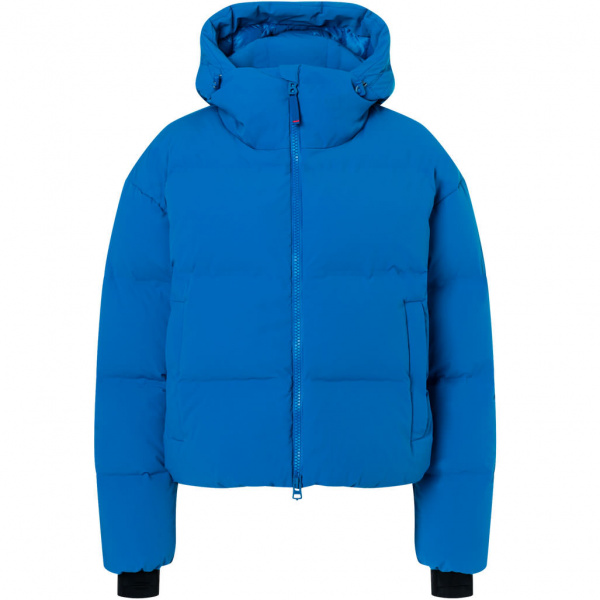
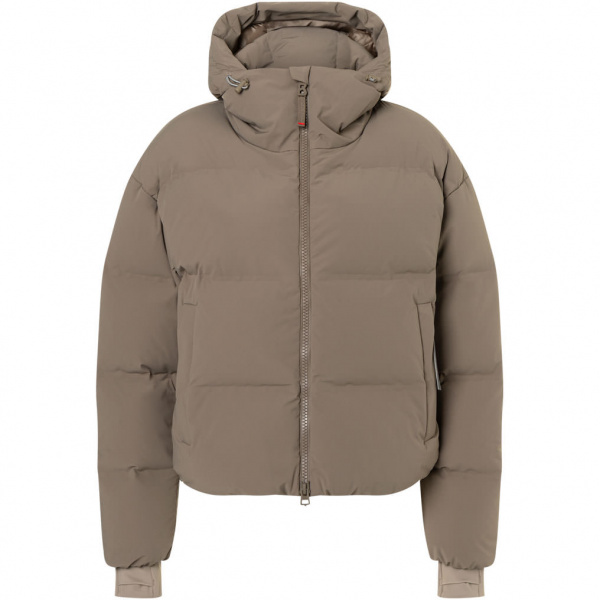
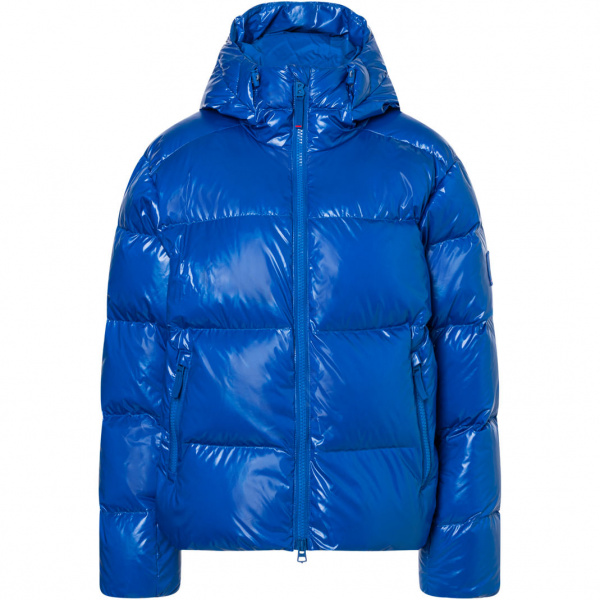
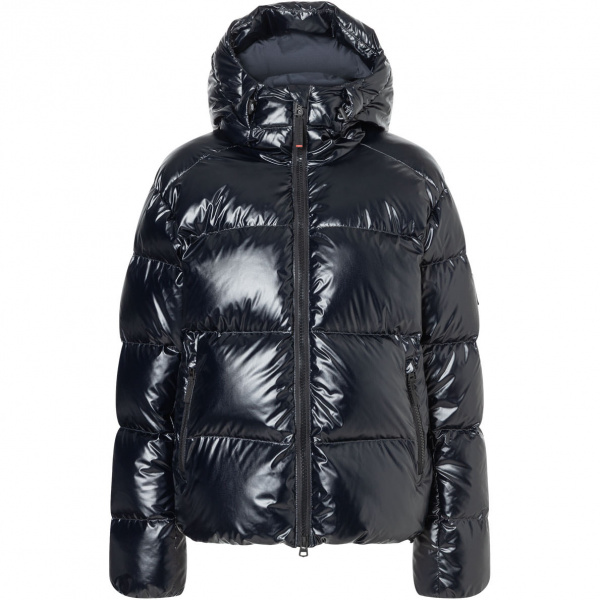
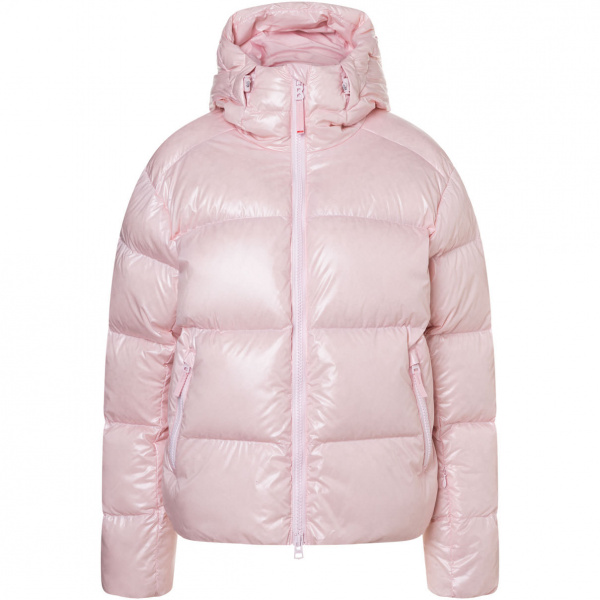
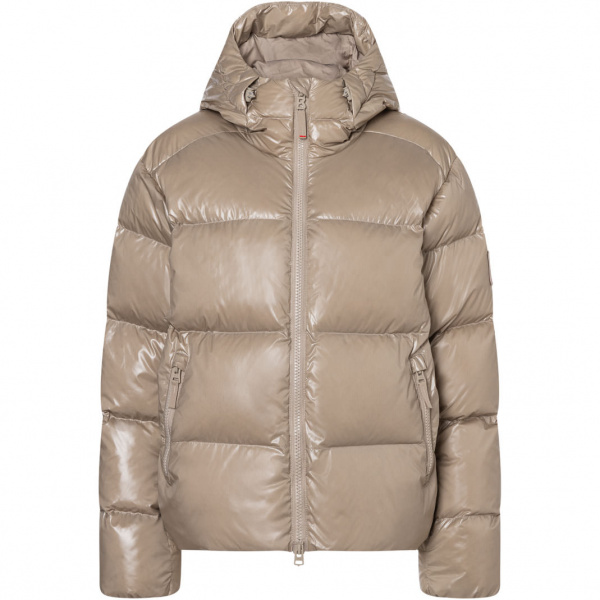
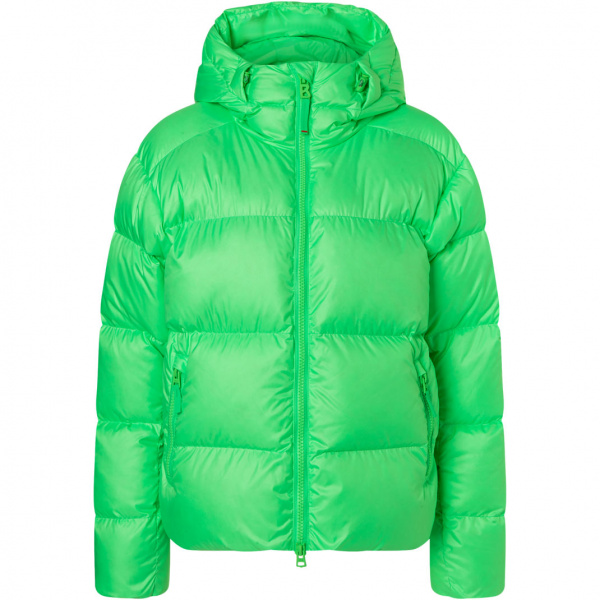
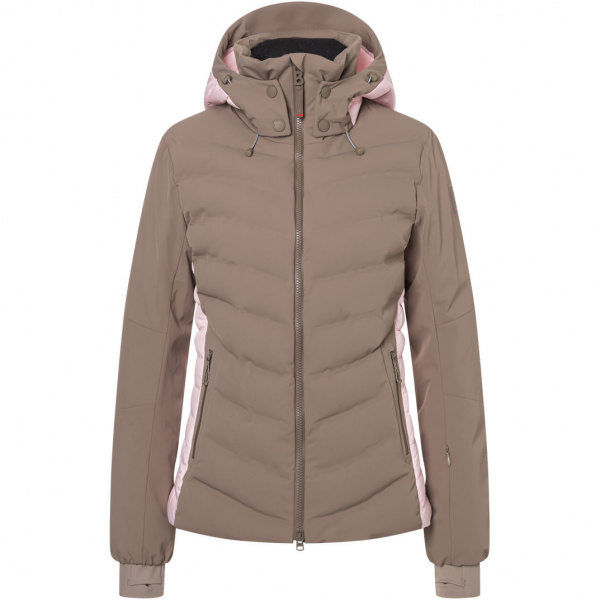
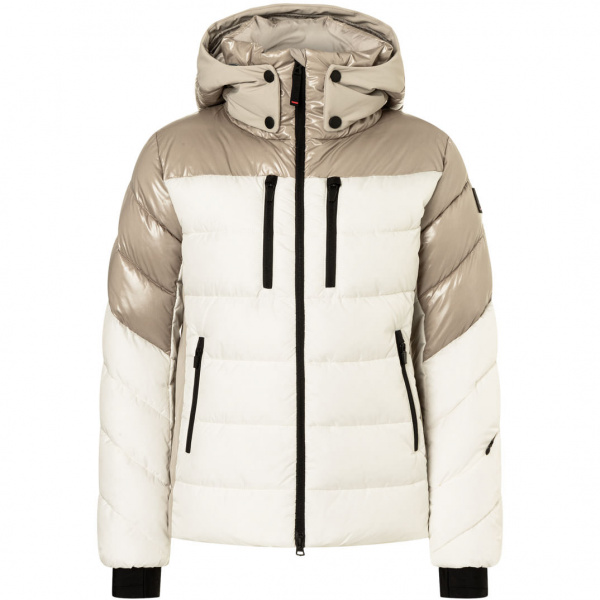
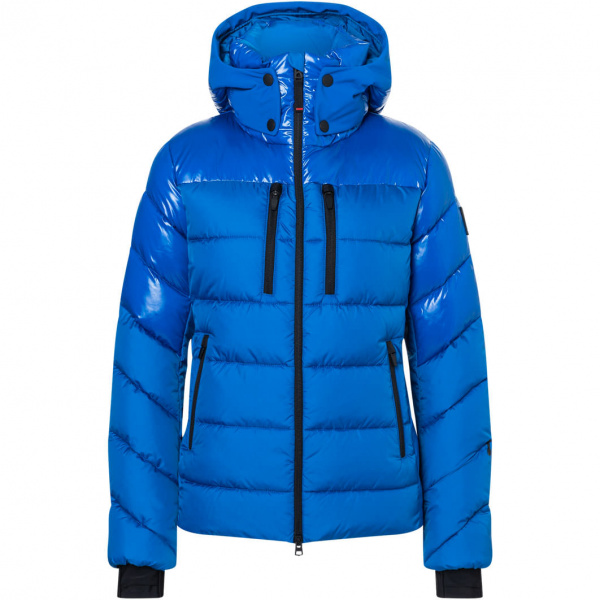
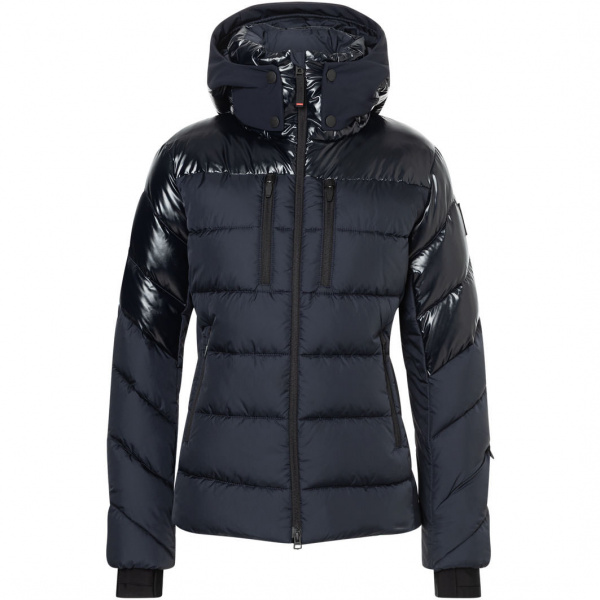
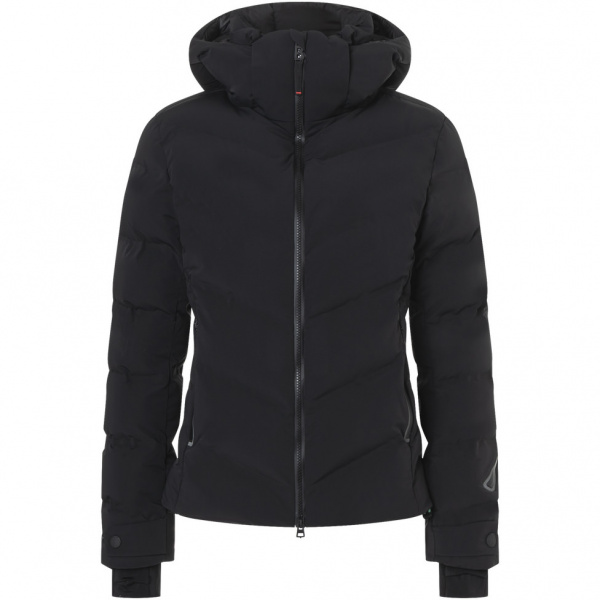
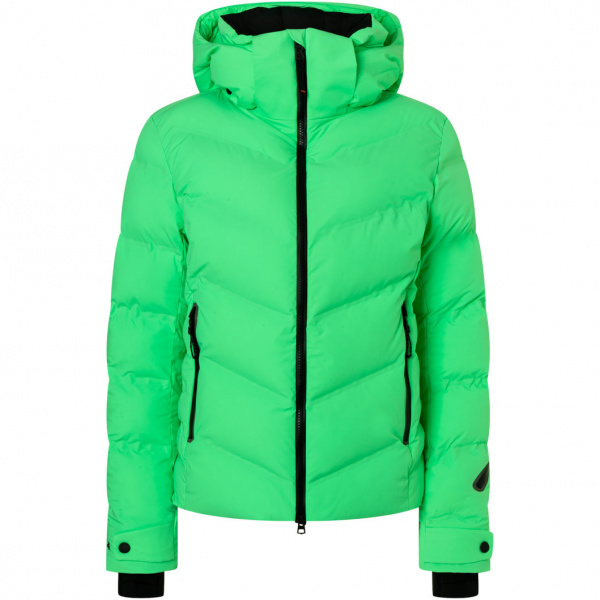
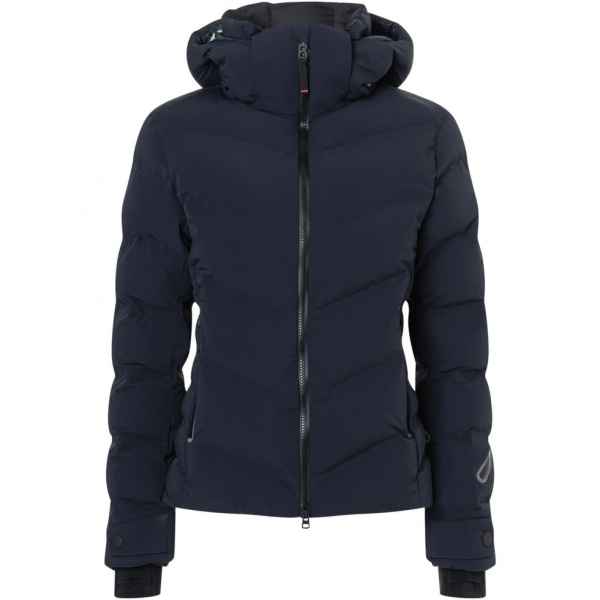
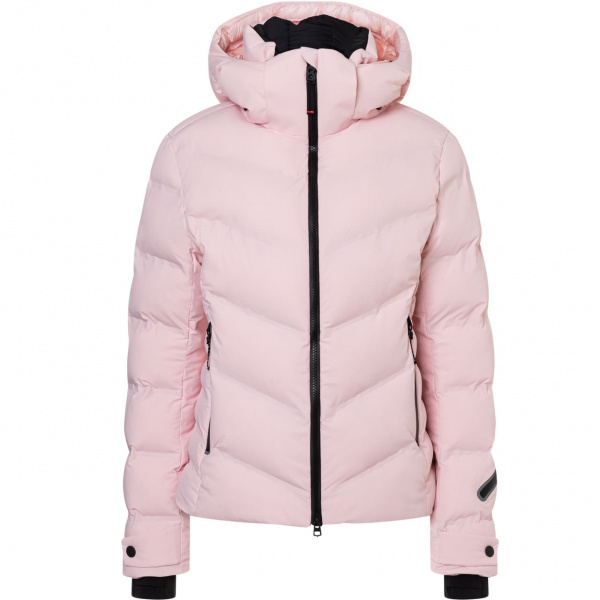
22 of 753 Products shown
Ski jackets: choosing the right combination of weather protection, warmth and freedom of movement
The right ski jacket protects you from wind, snow and wet conditions without making you overheat unnecessarily whilst skiing or restricting your movement. Five factors are particularly important when choosing a jacket: weather protection, insulation, breathability, ventilation and fit. If you combine these criteria to suit your own skiing style, you’ll usually make a better choice than if you focus on a single technical specification.
One of the most important questions to ask right at the start is therefore: should the ski jacket provide warmth in its own right, or is its main purpose to protect against the weather? Padded ski jackets combine external protection with insulation. Hardshell ski jackets, on the other hand, focus on protection against wind and wet conditions and are worn with base layers and mid-layers depending on the temperature.
At XSPO, we therefore don’t just judge ski jackets by their brand or design. Our team consists of experienced winter sports enthusiasts and skiers. In our view, what really matters is how well a jacket suits the temperature, the intensity of your skiing, your personal sensitivity to the cold and the layers you wear underneath.
Which ski jacket is best suited to which activity?
For classic days’ skiing on the slopes, an insulated ski jacket is the simplest solution for many skiers. The outer layer and membrane provide protection from the elements, whilst additional padding retains heat. It is particularly suitable for skiers who tend to feel the cold, take a lot of lift rides, or do not want to be constantly adjusting their layers of clothing.
By contrast, those who ride at a brisk pace generate significantly more body heat. A very heavily insulated jacket can then quickly become too warm. For active riders, therefore, moderate insulation, good breathability and ventilation openings are often more important than maximum warmth.
A hardshell ski jacket has little or no insulation. Its advantage lies in its adaptability: in mild conditions, a thin mid-layer is sufficient; in cold weather, a thicker insulating layer can be added. Hardshells are therefore particularly suitable for changeable weather conditions, freeriding and skiers who want to be able to adapt their clothing system as required.
Softshell designs often offer greater elasticity and are comfortable to wear; however, depending on the material, they do not provide the same level of weather protection as a fully waterproof hardshell. They really come into their own in dry conditions and during high-intensity activity.
Rule of thumb: If you feel the cold easily and mainly ski on groomed slopes, you’ll often benefit from an insulated ski jacket. If you tend to sweat easily, ski at a very fast pace or want to be prepared for a range of conditions, you should prioritise ventilation and a flexible layering system.
The layering principle: What layers should you wear under a ski jacket?
The ‘onion’ principle distributes moisture management, insulation and weather protection across several layers of clothing. This allows the body’s temperature to be regulated much more precisely than with a single, particularly warm jacket.
Base layer: The first layer sits directly against the skin and is designed to wick moisture away from the body. A functional base layer is particularly important because even a high-quality ski jacket cannot compensate for a soaked cotton T-shirt worn underneath.
Mid-layer: The middle layer is primarily responsible for insulation. Depending on the temperature, suitable options include, for example, fleece, stretch fabrics or lightweight insulated jackets.
Outer layer: The ski jacket protects against wind, snow and moisture. In the case of a padded ski jacket, it also provides some insulation.
The combination of the three layers is often more important than the maximum thermal output of any single component. At XSPO, we therefore recommend always considering a ski jacket in conjunction with the clothing that will actually be worn underneath it.
What features are really important in ski jackets?
Technical specifications help when comparing products, but they need to be put into context. A high water column rating, for example, tells you something about the material’s resistance to water pressure, but it does not automatically indicate how well the jacket as a whole will perform on a long day’s skiing.
| Water column | Describes a material's resistance to water penetration and is typically expressed in millimeters. | Higher figures generally indicate greater resistance to water pressure. Seams, zips and the overall construction of the jacket are also key factors. |
| Breathability | Describes how easily water vapor or moisture can escape to the outside. | Particularly important for sporty drivers. Manufacturers’ specifications are not always directly comparable due to differences in testing procedures. |
| Diaphragm | A functional barrier against wind and precipitation that is also designed to wick moisture away to the outside. | This is especially important in changeable weather and on longer days on the slopes. |
| Sealed Seams | Reduce the risk of moisture penetrating through the stitching holes. | More important in harsh weather conditions than in predominantly dry conditions. |
| Isolation | Stores warm air and reduces heat loss. | More insulation isn't necessarily better. Activity level, temperature, and personal sensitivity to the cold are the deciding factors. |
| Ventilation openings | They allow for additional air circulation, usually via zippers. | This is particularly useful for sporty drivers because it allows excess heat to be dissipated quickly. |
| Stretch | Increases the material's flexibility. | Ideal for dynamic skiing and form-fitting cuts. |
| Snow guard | Prevents snow from getting into the jacket from below. | Especially useful in deep snow, when falling, and in fresh snow. |
| Hood | Provides additional protection from the elements for the head and neck. | When using with a ski helmet, make sure it is the right size and adjustable. |
| Fit | Ensures freedom of movement and room for additional layers. | A ski jacket should be tested while in a skiing position, not just while standing upright. |
What does the water column rating of a ski jacket actually mean?
The water column is often used as a quick comparative measure. It describes the water pressure a material can withstand before moisture penetrates it.
For ski jackets, water column ratings around 10,000 millimeters are commonly used in Ski Wear. Higher ratings can offer advantages during prolonged snowfall, wet weather, or intensive use.
However, it is important to note the limitations of this rating: A high water column rating does not automatically make a ski jacket completely waterproof. Seams, zippers, pockets, and seams where layers meet must also be designed accordingly.
When comparing products, details like these are often more meaningful than the highest possible number on the product label.
How important is breathability in a ski jacket?
The more intense the skiing, the more important moisture management becomes. A breathable membrane helps wick water vapor away from the body. However, during high-intensity activity, the membrane alone is often not enough.
That's why many sport-style ski jackets have additional ventilation zippers, often under the arms or on the sides of the torso. They allow for a much faster exchange of air.
A common mistake when choosing a jacket is therefore to focus solely on warmth. If you ride aggressively and sweat quickly, you may be more comfortable in a slightly lighter jacket with good ventilation than in one with maximum insulation.
Synthetic insulation or down?
Synthetic insulation is particularly common in ski jackets. It is relatively easy to work with and, depending on the material, retains much of its insulating properties even when wet.
Down, on the other hand, stands out primarily for its excellent balance of warmth, weight, and pack size. However, the filling material isn’t the only decisive factor when it comes to a ski jacket. The outer fabric, moisture protection, chamber construction, and range of motion also influence how well the jacket performs in the snow.
Therefore, the more sensible question is not, “Which is better: down or synthetic fiber?” but rather, “Which insulation is best suited for my intended use?”
Ski Jackets vs. Race and Teamwear: What's the Difference?
Not every sporty ski jacket automatically falls into the "Race" or "Teamwear" categories. The general category of ski jackets covers a wide range, from comfort-oriented slope jackets to technically advanced shell models.
Race and teamwear is specifically designed for racers, clubs, teams, and skiers who are actively looking for racing collections or typical team designs. These jackets can have the same functional features as other high-quality ski jackets, such as a membrane, insulation, a snow skirt, or a ski pass pocket.
The difference, therefore, lies less in a simple hierarchy of quality than in the collection's intended use and focus.
The general ski jackets category is a good choice when weather protection, warmth, comfort, and a personalized fit are the top priorities. Race and teamwear are the more specific options if you're looking for racing-related items, a team look, or a specific race collection.
That’s why we also treat these categories separately at XSPO. A skier who skis at a competitive level on regular ski days doesn’t automatically need a race jacket. Conversely, for a racer, a regular, highly comfort-oriented ski jacket may be less suitable than a model specifically designed for that purpose.
How do you find the right ski jacket?
- Determine your primary area of application. For classic days on the slopes, an insulated ski jacket is often the simplest option. Those who ski very aggressively or want to be prepared for rapidly changing conditions will benefit more from a flexible layering system.
- Assess your personal sensitivity to heat realistically. If you get cold easily, you need more insulation. If you sweat easily, don't overestimate the importance of thermal performance; instead, prioritize ventilation.
- Choose between a padded ski jacket and a shell jacket. A padded jacket combines weather protection and warmth. A shell jacket offers more flexibility when choosing what to wear underneath.
- Consider the water column and the structure together. Hohe technische Werte sind sinnvoll, wenn Nähte, Reißverschlüsse und Abschlüsse ebenfalls zum gewünschten Wetterschutz passen.
- Pay attention to moisture management. Atmungsaktivität, Belüftungsöffnungen und die richtige Funktionswäsche müssen zusammenspielen.
- Check the range of motion in a realistic position. Raise your arms, lean forward, and mimic the position you would take while skiing. A ski jacket shouldn't be too tight across the shoulders and back, nor should it be unnecessarily loose.
- Keep in mind the clothes you'll be wearing under your ski jacket. Eine Jacke, die nur über einem T Shirt perfekt sitzt, kann mit Baselayer und Midlayer zu eng werden.
- Choose features based on their actual usefulness. A snow skirt, ski pass pocket, helmet-compatible hood, interior pockets, and adjustable sleeves can be practical. Not every feature is necessary for every rider.
- Check to see if "Race" and "Teamwear" are a better fit. Wer gezielt eine Rennsport Kollektion, Teamdesign oder Race Ausrichtung sucht, sollte zusätzlich diese separate Kategorie berücksichtigen.
- Care for your ski jacket according to the manufacturer's instructions. Membranen und wasserabweisende Oberflächen funktionieren langfristig nur dann zuverlässig, wenn Waschmittel, Waschprogramm und Imprägnierung zum Material passen.
If you keep these points in mind, you can significantly narrow down your choices. At XSPO, advice comes from an environment where winter sports are more than just a product category: The family-run company relies on experienced skiers and winter sports enthusiasts on its team and carries ski equipment for various skill levels and uses. Products are selected and tested according to the team’s own quality standards. This means that when it comes to a ski jacket, you can ask not only about the technical specifications but also whether the entire clothing system is a good fit for the specific skier and the day’s skiing conditions.
Frequently Asked Questions About Ski Jackets
Ski jackets: choosing the right combination of weather protection, warmth and freedom of movement
The right ski jacket protects you from wind, snow and wet conditions without making you overheat unnecessarily whilst skiing or restricting your movement. Five factors are particularly important when choosing a jacket: weather protection, insulation, breathability, ventilation and fit. If you combine these criteria to suit your own skiing style, you’ll usually make a better choice than if you focus on a single technical specification.
One of the most important questions to ask right at the start is therefore: should the ski jacket provide warmth in its own right, or is its main purpose to protect against the weather? Padded ski jackets combine external protection with insulation. Hardshell ski jackets, on the other hand, focus on protection against wind and wet conditions and are worn with base layers and mid-layers depending on the temperature.
At XSPO, we therefore don’t just judge ski jackets by their brand or design. Our team consists of experienced winter sports enthusiasts and skiers. In our view, what really matters is how well a jacket suits the temperature, the intensity of your skiing, your personal sensitivity to the cold and the layers you wear underneath.
Which ski jacket is best suited to which activity?
For classic days’ skiing on the slopes, an insulated ski jacket is the simplest solution for many skiers. The outer layer and membrane provide protection from the elements, whilst additional padding retains heat. It is particularly suitable for skiers who tend to feel the cold, take a lot of lift rides, or do not want to be constantly adjusting their layers of clothing.
By contrast, those who ride at a brisk pace generate significantly more body heat. A very heavily insulated jacket can then quickly become too warm. For active riders, therefore, moderate insulation, good breathability and ventilation openings are often more important than maximum warmth.
A hardshell ski jacket has little or no insulation. Its advantage lies in its adaptability: in mild conditions, a thin mid-layer is sufficient; in cold weather, a thicker insulating layer can be added. Hardshells are therefore particularly suitable for changeable weather conditions, freeriding and skiers who want to be able to adapt their clothing system as required.
Softshell designs often offer greater elasticity and are comfortable to wear; however, depending on the material, they do not provide the same level of weather protection as a fully waterproof hardshell. They really come into their own in dry conditions and during high-intensity activity.
Rule of thumb: If you feel the cold easily and mainly ski on groomed slopes, you’ll often benefit from an insulated ski jacket. If you tend to sweat easily, ski at a very fast pace or want to be prepared for a range of conditions, you should prioritise ventilation and a flexible layering system.
The layering principle: What layers should you wear under a ski jacket?
The ‘onion’ principle distributes moisture management, insulation and weather protection across several layers of clothing. This allows the body’s temperature to be regulated much more precisely than with a single, particularly warm jacket.
Base layer: The first layer sits directly against the skin and is designed to wick moisture away from the body. A functional base layer is particularly important because even a high-quality ski jacket cannot compensate for a soaked cotton T-shirt worn underneath.
Mid-layer: The middle layer is primarily responsible for insulation. Depending on the temperature, suitable options include, for example, fleece, stretch fabrics or lightweight insulated jackets.
Outer layer: The ski jacket protects against wind, snow and moisture. In the case of a padded ski jacket, it also provides some insulation.
The combination of the three layers is often more important than the maximum thermal output of any single component. At XSPO, we therefore recommend always considering a ski jacket in conjunction with the clothing that will actually be worn underneath it.
What features are really important in ski jackets?
Technical specifications help when comparing products, but they need to be put into context. A high water column rating, for example, tells you something about the material’s resistance to water pressure, but it does not automatically indicate how well the jacket as a whole will perform on a long day’s skiing.
| Water column | Describes a material's resistance to water penetration and is typically expressed in millimeters. | Higher figures generally indicate greater resistance to water pressure. Seams, zips and the overall construction of the jacket are also key factors. |
| Breathability | Describes how easily water vapor or moisture can escape to the outside. | Particularly important for sporty drivers. Manufacturers’ specifications are not always directly comparable due to differences in testing procedures. |
| Diaphragm | A functional barrier against wind and precipitation that is also designed to wick moisture away to the outside. | This is especially important in changeable weather and on longer days on the slopes. |
| Sealed Seams | Reduce the risk of moisture penetrating through the stitching holes. | More important in harsh weather conditions than in predominantly dry conditions. |
| Isolation | Stores warm air and reduces heat loss. | More insulation isn't necessarily better. Activity level, temperature, and personal sensitivity to the cold are the deciding factors. |
| Ventilation openings | They allow for additional air circulation, usually via zippers. | This is particularly useful for sporty drivers because it allows excess heat to be dissipated quickly. |
| Stretch | Increases the material's flexibility. | Ideal for dynamic skiing and form-fitting cuts. |
| Snow guard | Prevents snow from getting into the jacket from below. | Especially useful in deep snow, when falling, and in fresh snow. |
| Hood | Provides additional protection from the elements for the head and neck. | When using with a ski helmet, make sure it is the right size and adjustable. |
| Fit | Ensures freedom of movement and room for additional layers. | A ski jacket should be tested while in a skiing position, not just while standing upright. |
What does the water column rating of a ski jacket actually mean?
The water column is often used as a quick comparative measure. It describes the water pressure a material can withstand before moisture penetrates it.
For ski jackets, water column ratings around 10,000 millimeters are commonly used in Ski Wear. Higher ratings can offer advantages during prolonged snowfall, wet weather, or intensive use.
However, it is important to note the limitations of this rating: A high water column rating does not automatically make a ski jacket completely waterproof. Seams, zippers, pockets, and seams where layers meet must also be designed accordingly.
When comparing products, details like these are often more meaningful than the highest possible number on the product label.
How important is breathability in a ski jacket?
The more intense the skiing, the more important moisture management becomes. A breathable membrane helps wick water vapor away from the body. However, during high-intensity activity, the membrane alone is often not enough.
That's why many sport-style ski jackets have additional ventilation zippers, often under the arms or on the sides of the torso. They allow for a much faster exchange of air.
A common mistake when choosing a jacket is therefore to focus solely on warmth. If you ride aggressively and sweat quickly, you may be more comfortable in a slightly lighter jacket with good ventilation than in one with maximum insulation.
Synthetic insulation or down?
Synthetic insulation is particularly common in ski jackets. It is relatively easy to work with and, depending on the material, retains much of its insulating properties even when wet.
Down, on the other hand, stands out primarily for its excellent balance of warmth, weight, and pack size. However, the filling material isn’t the only decisive factor when it comes to a ski jacket. The outer fabric, moisture protection, chamber construction, and range of motion also influence how well the jacket performs in the snow.
Therefore, the more sensible question is not, “Which is better: down or synthetic fiber?” but rather, “Which insulation is best suited for my intended use?”
Ski Jackets vs. Race and Teamwear: What's the Difference?
Not every sporty ski jacket automatically falls into the "Race" or "Teamwear" categories. The general category of ski jackets covers a wide range, from comfort-oriented slope jackets to technically advanced shell models.
Race and teamwear is specifically designed for racers, clubs, teams, and skiers who are actively looking for racing collections or typical team designs. These jackets can have the same functional features as other high-quality ski jackets, such as a membrane, insulation, a snow skirt, or a ski pass pocket.
The difference, therefore, lies less in a simple hierarchy of quality than in the collection's intended use and focus.
The general ski jackets category is a good choice when weather protection, warmth, comfort, and a personalized fit are the top priorities. Race and teamwear are the more specific options if you're looking for racing-related items, a team look, or a specific race collection.
That’s why we also treat these categories separately at XSPO. A skier who skis at a competitive level on regular ski days doesn’t automatically need a race jacket. Conversely, for a racer, a regular, highly comfort-oriented ski jacket may be less suitable than a model specifically designed for that purpose.
How do you find the right ski jacket?
- Determine your primary area of application. For classic days on the slopes, an insulated ski jacket is often the simplest option. Those who ski very aggressively or want to be prepared for rapidly changing conditions will benefit more from a flexible layering system.
- Assess your personal sensitivity to heat realistically. If you get cold easily, you need more insulation. If you sweat easily, don't overestimate the importance of thermal performance; instead, prioritize ventilation.
- Choose between a padded ski jacket and a shell jacket. A padded jacket combines weather protection and warmth. A shell jacket offers more flexibility when choosing what to wear underneath.
- Consider the water column and the structure together. Hohe technische Werte sind sinnvoll, wenn Nähte, Reißverschlüsse und Abschlüsse ebenfalls zum gewünschten Wetterschutz passen.
- Pay attention to moisture management. Atmungsaktivität, Belüftungsöffnungen und die richtige Funktionswäsche müssen zusammenspielen.
- Check the range of motion in a realistic position. Raise your arms, lean forward, and mimic the position you would take while skiing. A ski jacket shouldn't be too tight across the shoulders and back, nor should it be unnecessarily loose.
- Keep in mind the clothes you'll be wearing under your ski jacket. Eine Jacke, die nur über einem T Shirt perfekt sitzt, kann mit Baselayer und Midlayer zu eng werden.
- Choose features based on their actual usefulness. A snow skirt, ski pass pocket, helmet-compatible hood, interior pockets, and adjustable sleeves can be practical. Not every feature is necessary for every rider.
- Check to see if "Race" and "Teamwear" are a better fit. Wer gezielt eine Rennsport Kollektion, Teamdesign oder Race Ausrichtung sucht, sollte zusätzlich diese separate Kategorie berücksichtigen.
- Care for your ski jacket according to the manufacturer's instructions. Membranen und wasserabweisende Oberflächen funktionieren langfristig nur dann zuverlässig, wenn Waschmittel, Waschprogramm und Imprägnierung zum Material passen.
If you keep these points in mind, you can significantly narrow down your choices. At XSPO, advice comes from an environment where winter sports are more than just a product category: The family-run company relies on experienced skiers and winter sports enthusiasts on its team and carries ski equipment for various skill levels and uses. Products are selected and tested according to the team’s own quality standards. This means that when it comes to a ski jacket, you can ask not only about the technical specifications but also whether the entire clothing system is a good fit for the specific skier and the day’s skiing conditions.