

'%3e%3cpath%20id='Vector'%20d='M4.83105%200.720662C4.60547%200.17574%204.01074%20-0.114299%203.44238%200.0409743L0.864258%200.744099C0.354492%200.884724%200%201.34761%200%201.87496C0%209.123%205.87695%2015%2013.125%2015C13.6523%2015%2014.1152%2014.6455%2014.2559%2014.1357L14.959%2011.5576C15.1143%2010.9892%2014.8242%2010.3945%2014.2793%2010.1689L11.4668%208.99703C10.9893%208.79781%2010.4355%208.93551%2010.1104%209.33687L8.92676%2010.7812C6.86426%209.80562%205.19434%208.1357%204.21875%206.0732L5.66309%204.89254C6.06445%204.56441%206.20215%204.01363%206.00293%203.53609L4.83105%200.723592V0.720662Z'%20fill='white'/%3e%3c/g%3e%3cdefs%3e%3cclipPath%20id='clip0_4_624'%3e%3crect%20width='15'%20height='15'%20fill='white'/%3e%3c/clipPath%3e%3c/defs%3e%3c/svg%3e)
'%3e%3cpath%20id='Vector'%20d='M17.74%2030.5L16%2029.5L20%2022.5H26C26.5304%2022.5%2027.0391%2022.2893%2027.4142%2021.9142C27.7893%2021.5391%2028%2021.0304%2028%2020.5V8.5C28%207.96957%2027.7893%207.46086%2027.4142%207.08579C27.0391%206.71071%2026.5304%206.5%2026%206.5H6C5.46957%206.5%204.96086%206.71071%204.58579%207.08579C4.21071%207.46086%204%207.96957%204%208.5V20.5C4%2021.0304%204.21071%2021.5391%204.58579%2021.9142C4.96086%2022.2893%205.46957%2022.5%206%2022.5H15V24.5H6C4.93913%2024.5%203.92172%2024.0786%203.17157%2023.3284C2.42143%2022.5783%202%2021.5609%202%2020.5V8.5C2%207.43913%202.42143%206.42172%203.17157%205.67157C3.92172%204.92143%204.93913%204.5%206%204.5H26C27.0609%204.5%2028.0783%204.92143%2028.8284%205.67157C29.5786%206.42172%2030%207.43913%2030%208.5V20.5C30%2021.5609%2029.5786%2022.5783%2028.8284%2023.3284C28.0783%2024.0786%2027.0609%2024.5%2026%2024.5H21.16L17.74%2030.5Z'%20fill='white'/%3e%3cpath%20id='Vector_2'%20d='M24%2010.5H8V12.5H24V10.5Z'%20fill='white'/%3e%3cpath%20id='Vector_3'%20d='M18%2016.5H8V18.5H18V16.5Z'%20fill='white'/%3e%3c/g%3e%3cdefs%3e%3cclipPath%20id='clip0_4_634'%3e%3crect%20width='32'%20height='32'%20fill='white'%20transform='translate(0%200.5)'/%3e%3c/clipPath%3e%3c/defs%3e%3c/svg%3e)





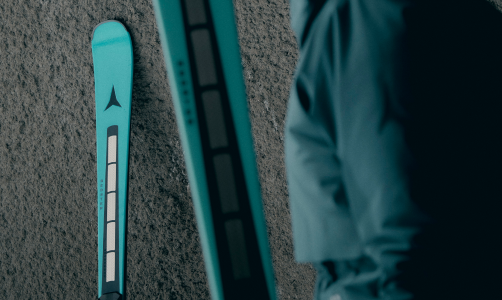
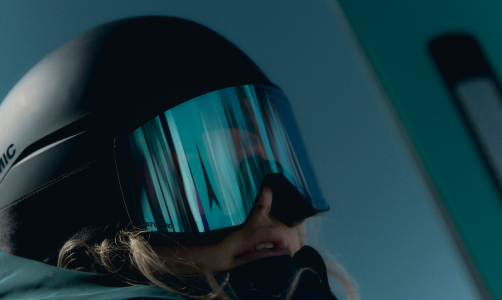


Allmountain ski + Allround ski
All-mountain skis and all-round skis - the versatile ski combo at XSPO
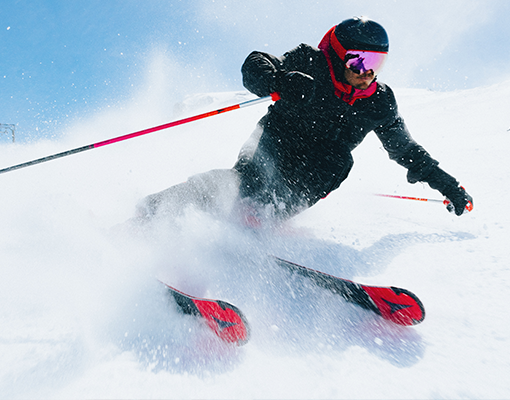
All-mountain skis and all-round skis reliably pick you up wherever you are: from the first safe carving turn to the spontaneous descent in changing terrain. With the right skis, you can ski in a more relaxed and controlled manner and have noticeably more fun. At XSPO, you'll find a careful selection that meets your requirements without compromise.
Intended use - where all-round skis and all-mountain skis shine
All-round skis are the uncomplicated companions for beginners and slightly advanced skiers who are out and about on groomed slopes. They forgive mistakes, allow you to initiate turns easily and feel comfortable at slow to medium speeds.
All-mountain skis are designed for advanced to expert skiers who want to switch variably between piste, soft snow and occasional detours off-piste. They offer more reserves when the speed increases or the conditions change.
Features, materials and differences at a glance
You can see the most important features here in a direct comparison. The information is deliberately kept general, as manufacturers and models vary.
| Field of application | Prepared slope, technical setup | Piste to easy off-piste, changing conditions |
| Target group | Beginner to slightly advanced | Advanced to expert |
| Center width | often around 70 mm | typically 75 to 95 mm |
| Edge grip | Good on hard surfaces | Solid to sporty, more versatility |
| Cornering behavior | easy turn initiation, shorter radii | more stable at higher speeds, versatile radii |
| Rocker/Camber | Moderate tip rocker for easy control | more rocker at the front and often at the rear for lift |
| Flex | soft to medium hard, forgiving | medium-hard to sporty, more reserves |
| Binding | Often system connection for simple coordination | Frequent flat mount for individual setups |
| Tempo comfort | slow to medium | Medium to high |
| Snow conditions | hard to grippy | from hard to soft, even crushed |
Important: Stability at speed depends more on length, construction and stiffness than just the center width. Wider skis offer more flotation in soft snow, narrower skis offer more edge pressure on hard slopes.
How to find the right all-mountain or all-round ski for you
- Classify honestly: Realistically assess driving skills. Beginners choose all-round skis, advanced skiers with ambitions often choose all-mountain skis.
- Clarify the terrain: Mainly piste or also off-piste? The slope focus speaks for all-round, mixed use for all-mountain.
- Select width: Around 70 mm for piste-oriented and fast edge changes, 75 to 95 mm for more versatility and float.
- Determine length: As a basic rule, body height ± 5 cm. Beginners rather 5 to 10 cm shorter for maneuverability, sporty riders 5 to 10 cm longer for smoothness.
- Check flex and construction: Soft flex is forgiving, stiffer flex is smoother at speed. Constructions with metal layers or carbon increase stability.
- Pay attention to radius and rocker: Shorter radii and moderate tip rocker make learning easier; more rocker plus medium radius bring all-round versatility in the all-mountain sector.
- Choose the right binding setup: System bindings are uncomplicated; with flat skis you can adjust the binding and mounting point specifically.
- Consider weight and strength: More Bodyweight or a powerful riding style benefits from more stable constructions and a little more length.
Once you have sorted your requirements, the choice is easy. At XSPO, you'll find a wide range of carefully tested models from which you can filter your favorites.
XSPO offers you a wide range for this category and relies on tested quality to ensure that all-round skis and all-mountain skis suit your skiing style. We are winter sports enthusiasts and support you with our in-depth expertise in the pre-selection process.
Frequently asked questions about all-mountain skis and all-round skis
- Which all-round ski length makes sense?
Body height ± 5 cm is recommended as a starting point. Shorter skis increase maneuverability, longer skis are smoother. As a beginner, it is best to go for a shorter ski. - Which center width is suitable for all-round skis?
Center widths of around 70 mm are common for piste-oriented riding. - What center width is typical for all-mountain skis?
In the all-mountain segment, 75 to 95 mm are common to cover piste and changing conditions. - Are all-mountain skis suitable for beginners?
All-mountain skis work, but require more technique. All-round skis are generally easier to master for beginners. - How can I recognize a forgiving all-round ski?
Softer flex, moderate tip rocker and a not-too-long radius facilitate turn initiation. - What is the difference between bindings for all-round skis and all-mountain skis?
All-round skis often come with a system binding, while all-mountain skis are more often available as a flat version for a free choice of bindings. - What are the benefits of more length on all-mountain skis?
More length increases smoothness and stability at speed, but reduces maneuverability. - Are all-mountain skis sufficient in deep snow?
For occasional detours, yes. For a lot of deep snow, even wider Freeride models have an advantage.
All-mountain skis and all-round skis - the versatile ski combo at XSPO
All-mountain skis and all-round skis reliably pick you up wherever you are: from the first safe carving turn to the spontaneous descent in changing terrain. With the right skis, you can ski in a more relaxed and controlled manner and have noticeably more fun. At XSPO, you'll find a careful selection that meets your requirements without compromise.
Intended use - where all-round skis and all-mountain skis shine
All-round skis are the uncomplicated companions for beginners and slightly advanced skiers who are out and about on groomed slopes. They forgive mistakes, allow you to initiate turns easily and feel comfortable at slow to medium speeds.
All-mountain skis are designed for advanced to expert skiers who want to switch variably between piste, soft snow and occasional detours off-piste. They offer more reserves when the speed increases or the conditions change.
Features, materials and differences at a glance
You can see the most important features here in a direct comparison. The information is deliberately kept general, as manufacturers and models vary.
| Field of application | Prepared slope, technical setup | Piste to easy off-piste, changing conditions |
| Target group | Beginner to slightly advanced | Advanced to expert |
| Center width | often around 70 mm | typically 75 to 95 mm |
| Edge grip | Good on hard surfaces | Solid to sporty, more versatility |
| Cornering behavior | easy turn initiation, shorter radii | more stable at higher speeds, versatile radii |
| Rocker/Camber | Moderate tip rocker for easy control | more rocker at the front and often at the rear for lift |
| Flex | soft to medium hard, forgiving | medium-hard to sporty, more reserves |
| Binding | Often system connection for simple coordination | Frequent flat mount for individual setups |
| Tempo comfort | slow to medium | Medium to high |
| Snow conditions | hard to grippy | from hard to soft, even crushed |
Important: Stability at speed depends more on length, construction and stiffness than just the center width. Wider skis offer more flotation in soft snow, narrower skis offer more edge pressure on hard slopes.
How to find the right all-mountain or all-round ski for you
- Classify honestly: Realistically assess driving skills. Beginners choose all-round skis, advanced skiers with ambitions often choose all-mountain skis.
- Clarify the terrain: Mainly piste or also off-piste? The slope focus speaks for all-round, mixed use for all-mountain.
- Select width: Around 70 mm for piste-oriented and fast edge changes, 75 to 95 mm for more versatility and float.
- Determine length: As a basic rule, body height ± 5 cm. Beginners rather 5 to 10 cm shorter for maneuverability, sporty riders 5 to 10 cm longer for smoothness.
- Check flex and construction: Soft flex is forgiving, stiffer flex is smoother at speed. Constructions with metal layers or carbon increase stability.
- Pay attention to radius and rocker: Shorter radii and moderate tip rocker make learning easier; more rocker plus medium radius bring all-round versatility in the all-mountain sector.
- Choose the right binding setup: System bindings are uncomplicated; with flat skis you can adjust the binding and mounting point specifically.
- Consider weight and strength: More Bodyweight or a powerful riding style benefits from more stable constructions and a little more length.
Once you have sorted your requirements, the choice is easy. At XSPO, you'll find a wide range of carefully tested models from which you can filter your favorites.
XSPO offers you a wide range for this category and relies on tested quality to ensure that all-round skis and all-mountain skis suit your skiing style. We are winter sports enthusiasts and support you with our in-depth expertise in the pre-selection process.
Frequently asked questions about all-mountain skis and all-round skis
- Which all-round ski length makes sense?
Body height ± 5 cm is recommended as a starting point. Shorter skis increase maneuverability, longer skis are smoother. As a beginner, it is best to go for a shorter ski. - Which center width is suitable for all-round skis?
Center widths of around 70 mm are common for piste-oriented riding. - What center width is typical for all-mountain skis?
In the all-mountain segment, 75 to 95 mm are common to cover piste and changing conditions. - Are all-mountain skis suitable for beginners?
All-mountain skis work, but require more technique. All-round skis are generally easier to master for beginners. - How can I recognize a forgiving all-round ski?
Softer flex, moderate tip rocker and a not-too-long radius facilitate turn initiation. - What is the difference between bindings for all-round skis and all-mountain skis?
All-round skis often come with a system binding, while all-mountain skis are more often available as a flat version for a free choice of bindings. - What are the benefits of more length on all-mountain skis?
More length increases smoothness and stability at speed, but reduces maneuverability. - Are all-mountain skis sufficient in deep snow?
For occasional detours, yes. For a lot of deep snow, even wider Freeride models have an advantage.