

'%3e%3cpath%20id='Vector'%20d='M4.83105%200.720662C4.60547%200.17574%204.01074%20-0.114299%203.44238%200.0409743L0.864258%200.744099C0.354492%200.884724%200%201.34761%200%201.87496C0%209.123%205.87695%2015%2013.125%2015C13.6523%2015%2014.1152%2014.6455%2014.2559%2014.1357L14.959%2011.5576C15.1143%2010.9892%2014.8242%2010.3945%2014.2793%2010.1689L11.4668%208.99703C10.9893%208.79781%2010.4355%208.93551%2010.1104%209.33687L8.92676%2010.7812C6.86426%209.80562%205.19434%208.1357%204.21875%206.0732L5.66309%204.89254C6.06445%204.56441%206.20215%204.01363%206.00293%203.53609L4.83105%200.723592V0.720662Z'%20fill='white'/%3e%3c/g%3e%3cdefs%3e%3cclipPath%20id='clip0_4_624'%3e%3crect%20width='15'%20height='15'%20fill='white'/%3e%3c/clipPath%3e%3c/defs%3e%3c/svg%3e)
'%3e%3cpath%20id='Vector'%20d='M17.74%2030.5L16%2029.5L20%2022.5H26C26.5304%2022.5%2027.0391%2022.2893%2027.4142%2021.9142C27.7893%2021.5391%2028%2021.0304%2028%2020.5V8.5C28%207.96957%2027.7893%207.46086%2027.4142%207.08579C27.0391%206.71071%2026.5304%206.5%2026%206.5H6C5.46957%206.5%204.96086%206.71071%204.58579%207.08579C4.21071%207.46086%204%207.96957%204%208.5V20.5C4%2021.0304%204.21071%2021.5391%204.58579%2021.9142C4.96086%2022.2893%205.46957%2022.5%206%2022.5H15V24.5H6C4.93913%2024.5%203.92172%2024.0786%203.17157%2023.3284C2.42143%2022.5783%202%2021.5609%202%2020.5V8.5C2%207.43913%202.42143%206.42172%203.17157%205.67157C3.92172%204.92143%204.93913%204.5%206%204.5H26C27.0609%204.5%2028.0783%204.92143%2028.8284%205.67157C29.5786%206.42172%2030%207.43913%2030%208.5V20.5C30%2021.5609%2029.5786%2022.5783%2028.8284%2023.3284C28.0783%2024.0786%2027.0609%2024.5%2026%2024.5H21.16L17.74%2030.5Z'%20fill='white'/%3e%3cpath%20id='Vector_2'%20d='M24%2010.5H8V12.5H24V10.5Z'%20fill='white'/%3e%3cpath%20id='Vector_3'%20d='M18%2016.5H8V18.5H18V16.5Z'%20fill='white'/%3e%3c/g%3e%3cdefs%3e%3cclipPath%20id='clip0_4_634'%3e%3crect%20width='32'%20height='32'%20fill='white'%20transform='translate(0%200.5)'/%3e%3c/clipPath%3e%3c/defs%3e%3c/svg%3e)




with advancement capability
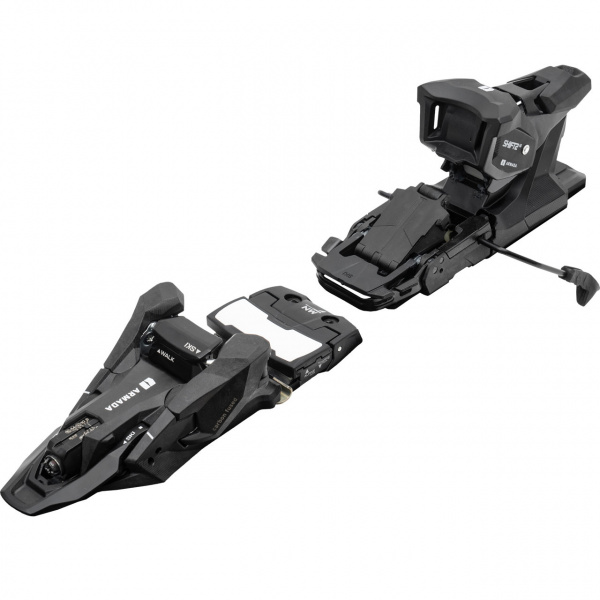


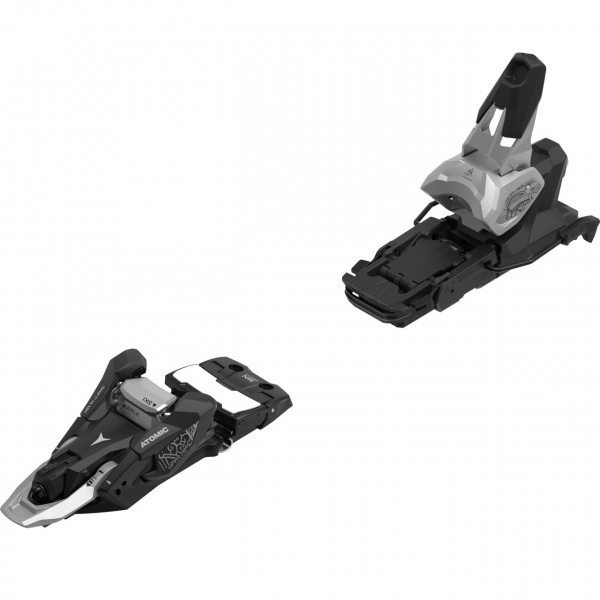

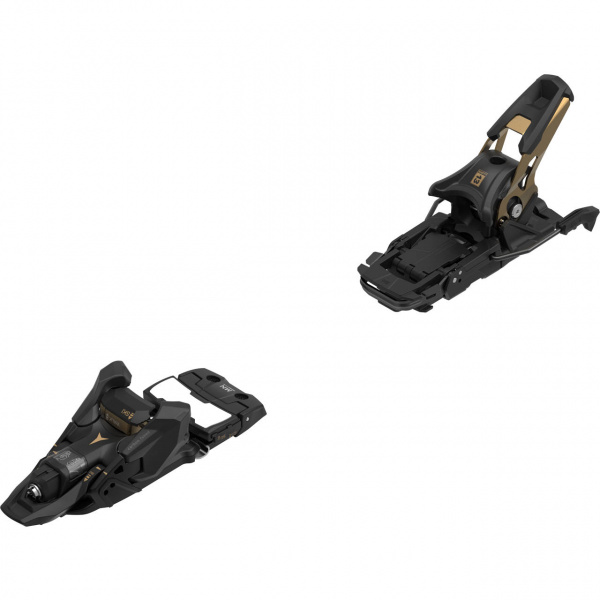


Freeski bindings with ascent function
If you want to explore new lines off-piste, choosing the right freeski binding with ascent function is crucial. Only with a binding that offers you freedom of movement on the ascent and stability on the descent can you experience the full backcountry adventure. At XSPO, we help you to find the binding that gives you maximum freedom both when hiking and powder skiing.
Purpose, scope and requirements
Freeski bindings with an ascent function are aimed at riders who want to storm summits independently and then enjoy untracked descents. Whether sidecountry, long approaches or steep climbs in the backcountry - the integrated walk mode ensures a natural rolling feeling and reduces muscle fatigue. After switching to ride mode, the robust construction and high Z-values guarantee a secure hold and controlled release, even at high speeds or technical drops.
Technical features and Markers in comparison
| Tour mode | Flat walking angle, 3 steps | Easy Skin ascent, 2 steps | minimalist walking comfort |
| Z-value | 6 - 12 | 7 - 16 | 4 - 10 |
| Weight (per pair) | approx. 2 700 g | approx. 2 500 g | approx. 1,200 g |
| Compatibility | Alpine and GripWalk sole | Alpine sole | Tech-Pin sole |
| Climbing aid | Integrated riser set | Integrated climbing aid | none, can be mounted separately |
| Material/construction | Aluminum, steel combined | Aluminum sole, titanium fasteners | Carbon reinforcement |
The path to the right freeski binding with ascent function
- Define your area of use: Think about whether you place more value on ultra-light ascents or uncompromising descents.
- Check the safety reserves (Z-value): Choose a Z-value that suits your riding style and Bodyweight.
- Ensure compatibility: Pay attention to the sole shape of your touring ski boot (Alpine, GripWalk, Tech-Pin).
- Evaluate weight and walking comfort: A lower weight makes long climbs easier, the climbing aid optimizes steep passages.
- Weigh up price-performance ratio: Compare Marker types in terms of durability, service and spare parts supply.
At XSPO, you benefit from our passion for winter sports and the expert knowledge of real Freeride enthusiasts. Our diverse range includes only tested quality, so that you feel just as safe on the ascent as you do on the powder ride.
Frequently asked questions about freeski bindings with ascent function
- How does the ascent function work on freeski bindings with ascent function?
Freeski bindings use a switchable pivot point and climbing aids that enable a flatter walking angle and thus support natural rolling. - What Z-values do freeski bindings with ascent function offer?
Most models cover Z-values from 4 to 16 to meet different weight and riding style requirements. - Are freeski bindings with ascent function compatible with every touring ski boot?
Pay attention to the sole standard (Alpine, GripWalk, Tech-Pin): Not all bindings support every sole. - How much does an average freeski binding with ascent function weigh?
Depending on the model, between 1 200 g and 2 700 g per pair. - Is a freeski binding with ascent function worthwhile for classic ski touring?
If your tours include technical descents and powder runs, yes. Ultra-light touring bindings are recommended for pure long-distance tours. - Can I use freeski bindings with ascent function in deep snow?
Yes, they are specially developed for powder and challenging terrain. - How do I maintain my freeski binding with ascent function?
Regular cleaning, lubricating the mechanics and checking the screws are essential. - Which freeski bindings with ascent function are suitable for beginners?
Models with a low Z-value and simple climbing aid, such as Salomon Shift MNC or lighter Marker Kingpin variants. - How do I set the walking mode of my freeski binding with ascent function?
Turn the lever or slider on the heel and fold out the climbing aid if necessary.
Freeski bindings with ascent function
If you want to explore new lines off-piste, choosing the right freeski binding with ascent function is crucial. Only with a binding that offers you freedom of movement on the ascent and stability on the descent can you experience the full backcountry adventure. At XSPO, we help you to find the binding that gives you maximum freedom both when hiking and powder skiing.
Purpose, scope and requirements
Freeski bindings with an ascent function are aimed at riders who want to storm summits independently and then enjoy untracked descents. Whether sidecountry, long approaches or steep climbs in the backcountry - the integrated walk mode ensures a natural rolling feeling and reduces muscle fatigue. After switching to ride mode, the robust construction and high Z-values guarantee a secure hold and controlled release, even at high speeds or technical drops.
Technical features and Markers in comparison
| Tour mode | Flat walking angle, 3 steps | Easy Skin ascent, 2 steps | minimalist walking comfort |
| Z-value | 6 - 12 | 7 - 16 | 4 - 10 |
| Weight (per pair) | approx. 2 700 g | approx. 2 500 g | approx. 1,200 g |
| Compatibility | Alpine and GripWalk sole | Alpine sole | Tech-Pin sole |
| Climbing aid | Integrated riser set | Integrated climbing aid | none, can be mounted separately |
| Material/construction | Aluminum, steel combined | Aluminum sole, titanium fasteners | Carbon reinforcement |
The path to the right freeski binding with ascent function
- Define your area of use: Think about whether you place more value on ultra-light ascents or uncompromising descents.
- Check the safety reserves (Z-value): Choose a Z-value that suits your riding style and Bodyweight.
- Ensure compatibility: Pay attention to the sole shape of your touring ski boot (Alpine, GripWalk, Tech-Pin).
- Evaluate weight and walking comfort: A lower weight makes long climbs easier, the climbing aid optimizes steep passages.
- Weigh up price-performance ratio: Compare Marker types in terms of durability, service and spare parts supply.
At XSPO, you benefit from our passion for winter sports and the expert knowledge of real Freeride enthusiasts. Our diverse range includes only tested quality, so that you feel just as safe on the ascent as you do on the powder ride.
Frequently asked questions about freeski bindings with ascent function
- How does the ascent function work on freeski bindings with ascent function?
Freeski bindings use a switchable pivot point and climbing aids that enable a flatter walking angle and thus support natural rolling. - What Z-values do freeski bindings with ascent function offer?
Most models cover Z-values from 4 to 16 to meet different weight and riding style requirements. - Are freeski bindings with ascent function compatible with every touring ski boot?
Pay attention to the sole standard (Alpine, GripWalk, Tech-Pin): Not all bindings support every sole. - How much does an average freeski binding with ascent function weigh?
Depending on the model, between 1 200 g and 2 700 g per pair. - Is a freeski binding with ascent function worthwhile for classic ski touring?
If your tours include technical descents and powder runs, yes. Ultra-light touring bindings are recommended for pure long-distance tours. - Can I use freeski bindings with ascent function in deep snow?
Yes, they are specially developed for powder and challenging terrain. - How do I maintain my freeski binding with ascent function?
Regular cleaning, lubricating the mechanics and checking the screws are essential. - Which freeski bindings with ascent function are suitable for beginners?
Models with a low Z-value and simple climbing aid, such as Salomon Shift MNC or lighter Marker Kingpin variants. - How do I set the walking mode of my freeski binding with ascent function?
Turn the lever or slider on the heel and fold out the climbing aid if necessary.