






Cross-country ski gloves









Cross-Country Skiing Gloves: Breathable, Grippy, and Comfortably Light
When cross-country skiing, your hands need to stay warm without overheating during intense activity. Good cross-country skiing gloves therefore combine wind protection, breathability, and a thin, grippy palm. They allow for precise pole use and give your fingers plenty of freedom of movement. Whether you’re cross-country skiing in the classic style or Skating style, the key factors are proper insulation, a secure fit in the pole strap, and materials that wick sweat away as quickly as possible. At XSPO, you’ll find cross-country skiing gloves for a variety of temperatures and training needs.
Which cross-country skiing gloves are best for Classic and Skating styles?
In classic cross-country skiing and Skating, the hands are subjected to heavy strain due to the repeated use of poles. It is especially important that the fingers can open and close easily during the push-off. Thick padding or poorly placed seams can interfere with this. A flexible palm and stretchy finger panels support the natural range of motion.
During high-intensity Skating, the physical exertion often generates a lot of body heat. In this case , thin, breathable cross-country skiing gloves are usually a good choice. For classic cross-country skiing at a moderate pace, a light lining may be more comfortable. However, skiing technique alone does not determine how warm you’ll stay. Training intensity, wind, and your personal sensitivity to the cold also play an important role.
At low temperatures, models with better insulation provide greater heat retention. For hands that are particularly sensitive to the cold, lobster gloves are also an option. Their partially joined finger compartments often retain heat better, but they do restrict independent finger movement somewhat.
What features are important in cross-country skiing gloves?
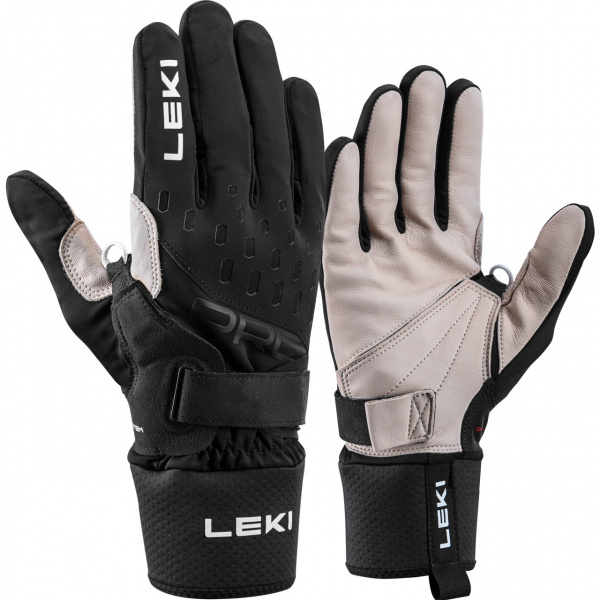
Cross-country skiing gloves are often made up of several material zones. While the back of the hand protects against wind, the palm is designed to allow for a secure grip on the poles. Elastic inserts support flexibility. How well these features work together depends on the overall construction.
| Wind protection | Windproof or wind-resistant outer materials reduce heat loss. | Completely windproof materials can limit breathability. |
| Breathability | Technical fibers and breathable sections of fabric help wick away moisture. | During intense workouts, lightweight designs are often more comfortable. |
| Palm | Synthetic leather or non-slip coatings improve grip on the stick handle. | Opt for minimal bulk and contact surfaces that are as unobstructed as possible. |
| Insulation | Fleece or lightweight synthetic padding increases heat retention. | Too much insulation can lead to heat buildup during high-intensity activity. |
| Elasticity | Stretch materials and pre-shaped fingers facilitate repetitive gripping motions. | The glove should not feel tight when opening the hand. |
| Reinforcements | Additional layers of material can protect high-stress areas on the thumb and palm. | Reinforcements must not cause pressure points inside the pole loop. |
The area between the thumb and index finger is particularly important. This is where repeated pressure and friction from the grip and strap occur when using the poles. A well-crafted design with as few creases as possible can reduce uncomfortable friction. At the same time, the palm should provide sufficient grip without restricting mobility.
How do you find the right cross-country skiing gloves?
- Assessing training intensity: Thin cross-country skiing gloves are usually best for fast, high-intensity workouts. At a more leisurely pace, you can opt for gloves with more insulation.
- Consider wind and temperature: In cold headwinds, a windproof back of the hand is especially helpful. A thick lining, on the other hand, isn’t necessary at every sub-zero temperature.
- Check the pole loops: Make sure the glove fits easily into your pole loop system. There should be no uncomfortable wrinkles or pressure points, especially at the base of the thumb.
- Check the fit: Measure the circumference of your hand without including your thumb and refer to the manufacturer’s size chart. The glove should fit snugly without constricting your fingers. The material should not feel tight when you open and close your hand.
- Check the palm and flexibility: A thin, grippy palm makes it easier to use the poles with control. Make sure you can grip the handle securely and open your fingers again when pushing off.
- Choose the right level of warmth: If you train in varying temperatures, you’ll often have more flexibility with one thin pair and one lightly lined pair than with a single, heavily insulated model.
At XSPO, you can choose cross-country skiing gloves based on warmth, material, and intended use. As a family-run winter sports specialist, we combine our passion for the sport with personalized expert advice. This way, you can find gloves that suit your training and your warmth needs.
Frequently Asked Questions About Cross-Country Skiing Gloves
Which cross-country skiing gloves are best for Skating?
For intense skating, thin, stretchy cross-country skiing gloves made of breathable materials with a grippy palm are ideal. In strong winds, a windproof back of the hand is recommended. The required insulation depends on the temperature and training intensity.
Which cross-country skiing gloves are suitable for classic-style skiing?
For classic cross-country skiing, flexible gloves that allow for good mobility and secure pole contact are ideal. At moderate speeds or in cold temperatures, a light lining may be helpful. It’s important that the gloves don’t interfere with pole work.
Why are cross-country skiing gloves usually thin?
Cross-country skiing generates a lot of heat due to the continuous physical exertion. Thin cross-country skiing gloves facilitate moisture wicking and allow for precise finger movement when using the poles. In cold weather, however, more heavily insulated models may be necessary.
How do cross-country skiing gloves affect power transfer when using the poles?
Cross-country skiing gloves affect the contact between the hand, the pole grip, and the strap. A thin, wrinkle-free palm and sufficient flexibility support controlled pole handling. Irritating seams or material that’s too thick can cause pressure points and impair grip.
Which type of palm provides the best grip in cross-country skiing gloves?
Palm areas made of synthetic leather or with suitable silicone coatings can provide a good grip on the cross-country ski pole. The actual grip also depends on the material of the pole grip, as well as on moisture and surface texture.
When are windproof cross-country skiing gloves a good choice?
Windproof cross-country skiing gloves are especially useful in cold headwinds, low temperatures, and during longer descents. They reduce heat loss caused by air movement. During intense physical activity, you should also ensure adequate moisture-wicking.
Why do cross-country skiing gloves get damp on the inside during training?
Moisture on the inside is often caused by hand sweat. If the insulation is too warm or moisture-wicking is limited, sweat can accumulate in the material. Thinner, breathable cross-country skiing gloves can improve moisture management during high-intensity activity.
How should cross-country skiing gloves with pole loops fit?
Cross-country skiing gloves should fit snugly inside the pole strap with as few wrinkles as possible. There should be no uncomfortable pressure points, especially between the thumb and index finger. The fingers must be able to open and close completely when using the poles.
Which cross-country skiing gloves are best for extremely cold days?
In extreme cold, windproof, heavily insulated cross-country skiing gloves are recommended. Lobster gloves can provide additional warmth retention thanks to their partially shared finger compartments. In addition to temperature, wind, training intensity, and individual sensitivity to cold are also key factors.